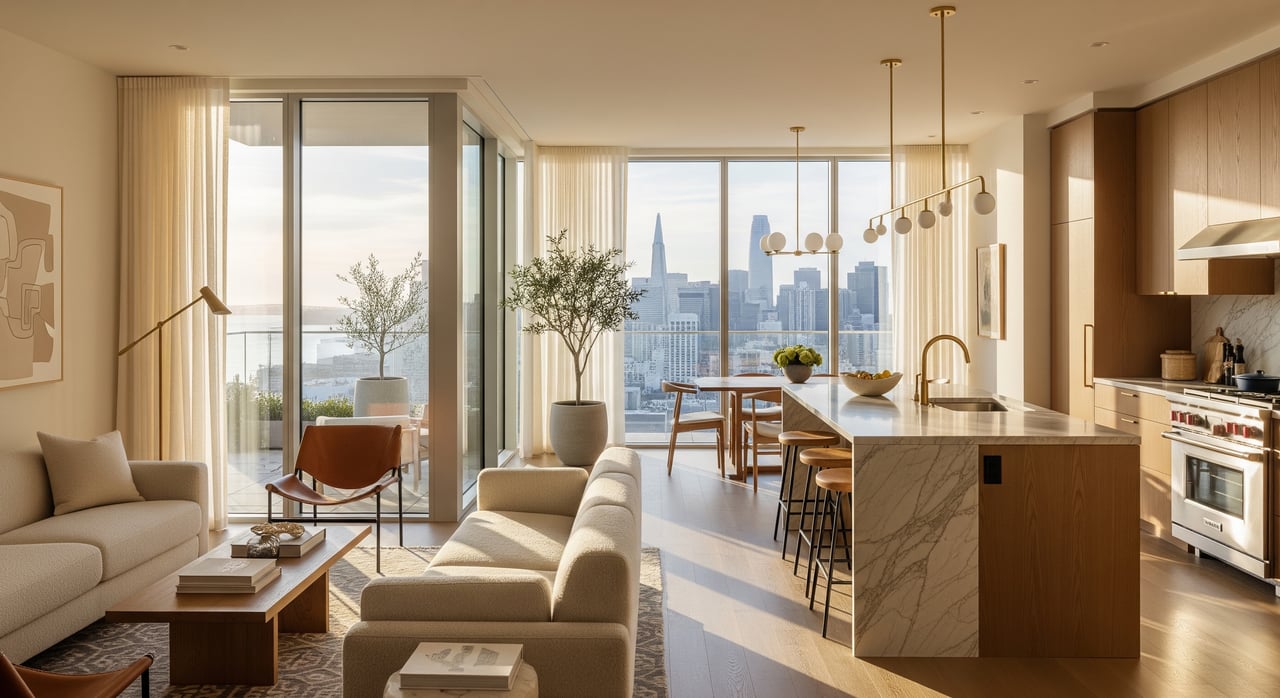
Is the idea of waking up to the Bay Bridge or Golden Gate views calling your name? If you want hotel-caliber service, privacy, and a quick downtown commute, a San Francisco luxury high-rise can deliver a streamlined, lock-and-leave lifestyle. You also want the full picture: how amenities work, what HOA dues cover, how fog and wind affect views, and what to check for seismic and rental rules. This guide breaks down daily life, neighborhoods and transit, real costs, and the due diligence that protects your investment. Let’s dive in.
What high-rise living feels like
San Francisco luxury towers center your day around convenience. You can start with a workout, grab coffee nearby, and head to meetings or enjoy remote work spaces without leaving the building. Evenings often shift to resident lounges, private dining rooms, or nearby restaurants and cultural venues.
The feel of a building depends on who lives there. Communities with many owner-occupants may host active resident events. Buildings with more pied-à-terre owners can feel quieter and more private, which some buyers prefer.
Views and microclimate
Views are the headline feature. Orientation and floor level influence whether you see the Bay Bridge, Alcatraz, Golden Gate Bridge, skyline, or hills. Fog matters, and it varies block to block. Western and southwestern exposures can see more fog or reduced visibility, while eastern exposures often capture clearer bay and bridge vistas.
Higher floors deliver dramatic light and panorama. You also experience more wind, sun glare, and, at times, harsher exposure that benefits from good window treatments and climate control.
Daily rhythm and privacy
Residents often treat these buildings like private clubs. Expect concierge-managed deliveries, controlled elevator access, and staff who coordinate tradespeople and vendor visits. Privacy is shaped by access systems, guest policies, and whether elevator banks are keyed to specific floors.
Amenities and services
Luxury buildings layer lifestyle amenities with practical support so you can live efficiently day to day.
Wellness and social spaces
You typically find fitness centers, yoga studios, lap pools, and saunas, along with outdoor terraces or rooftop gardens. Private dining rooms, lounges, screening rooms, business centers, co-working spaces, and guest suites create easy hosting options. Newer projects often integrate sustainability features such as EV charging and energy-efficient systems.
Concierge, security, and staffing
A true concierge experience goes beyond greeting you. Staff accept packages, manage deliveries, coordinate maintenance access, and assist with reservations. Buildings with 24/7 coverage offer a high level of service and security, which is reflected in monthly HOA dues. Controlled access systems, elevator security, and CCTV are common in this segment.
Lock-and-leave ease
For frequent travelers and pied-à-terre owners, lock-and-leave convenience is a core value. Smart-home systems, secure package handling, in-building management, and cooperative policies make it easy to leave for weeks with confidence. Review rules on subletting or short-term rentals before you assume you can host guests while you are away.
Neighborhoods and getting around
Most luxury towers cluster in the Financial District and Transbay area, Rincon Hill and the Embarcadero, SoMa, South Beach, and Mission Bay. Each district offers different views, energy, and microclimates.
Transit and commuting
You are positioned for easy movement around the city and the Bay Area. Nearby options often include BART and MUNI stations, the Salesforce Transit Center, Caltrain at 4th and King for Peninsula commutes, and ferry terminals. Many residents live car-light, relying on ride-hail, biking, and transit, although reserved parking remains important for some.
Walkability and street life
Dining, cultural institutions, and boutique shopping are close at hand, and delivery services fill any gaps. Street-level experience varies by block. Higher floors reduce street noise, though you may notice wind or occasional helicopter activity depending on location and weather.
Costs and ownership realities
High-rise ownership blends purchase price with ongoing monthly and annual costs. Understanding the full package helps you evaluate value.
Purchase and carrying costs
Luxury condo pricing varies by building, floor, view, and amenity level, with penthouses at a premium. HOA dues are typically higher in full-service buildings that include 24/7 staffing, extensive amenities, and security. Additional costs can include parking fees, storage rental, utilities not covered by the HOA, and special assessments for capital work or seismic needs.
Financing and resale dynamics
Jumbo financing is common in this segment. Lenders review building health, including reserves, owner-occupancy ratios, delinquency rates, rental percentages, and any litigation. Downtown luxury condos can be more cyclical than single-family homes, so factors like view corridors, floor height, deeded parking, and strong HOA finances can help resale prospects.
Insurance and seismic considerations
Earthquake risk is part of life in San Francisco. Earthquake insurance is usually separate from standard policies and can be costly. Ask for engineering reports, seismic design information, foundation details, and any settlement or retrofit disclosures. Transparency on structural history and upcoming work helps you compare buildings with confidence.
Taxes, transfer, and rental rules
Property taxes in California start around a base rate near 1% of assessed value, plus local assessments that vary by property. San Francisco also applies scaled transfer taxes at closing. Short-term rental rules are restrictive and typically require registration and a primary-residence standard. Many HOAs set lease minimums and limit short-term activity, so review CC&Rs if you plan any rental strategy.
Parking, storage, and EV
Parking can be deeded or paid separately, and availability varies by building. Storage is often limited, with on-site lockers sometimes waitlisted. If you drive electric, newer luxury towers more commonly offer EV charging, while older garages may require HOA approval and investment to add infrastructure.
Smart due diligence before you buy
Request documents and ask direct questions early. A complete file helps you compare options and avoid surprises.
Documents to review
- HOA budget, reserve study, recent financials, and meeting minutes
- CC&Rs and house rules for rentals, pets, subletting, and renovations
- Insurance summary for the building and any exclusions
- Recent engineering or structural reports and any litigation history
- Owner-occupancy ratios, delinquency rates, and rental percentages
- Parking deed status, storage availability, and EV charging plans
- Amenity operations, reservation systems, guest policies, and staffing schedules
Questions to ask management
- What do HOA dues include, and which utilities are covered?
- What are the rules for subletting and short-term rentals?
- Are capital projects or special assessments planned in the next 1 to 5 years?
- What is the owner-occupancy percentage and current rental policy?
- How are packages handled, and is concierge coverage 24/7?
- What seismic features does the building have, and have there been structural issues or retrofits?
- How is guest access controlled, including elevator protocols?
- How does parking work, and are there EV charging stations or guest parking?
- Are there restrictions on in-unit renovations or vendors?
Is a tower right for you?
Choose a building that matches how you actually live. If you value privacy, staffed security, and on-site wellness and work spaces, a full-service tower will likely fit. If low monthly dues are a priority over amenities, you may prefer a lighter-service building. Align location with your day-to-day routes, confirm view exposure and fog patterns, and model total monthly costs beyond the mortgage.
If you want specialist guidance on premier addresses such as Four Seasons, Millennium Tower, and St. Regis, along with off-market access and building-level insight, connect with Bryant Kowalczyk to schedule a private consultation.
FAQs
What do HOA dues usually cover in SF luxury towers?
- Dues typically fund staffing, concierge and security, building insurance, common-area utilities, and amenity operations, with coverage specifics detailed in the HOA budget and CC&Rs.
How do San Francisco short-term rental rules affect condo owners?
- The city restricts short-term rentals and generally requires registration and a primary-residence standard, and many HOAs add lease minimums that limit short stays.
Do I need separate earthquake insurance for a high-rise condo?
- Earthquake insurance is usually separate from standard policies, can be costly, and should be evaluated alongside building seismic design and engineering reports.
How does parking typically work in downtown towers?
- Parking may be deeded or rented for a monthly fee, guest parking is limited, and EV charging availability varies by building and garage infrastructure.
What factors most influence resale value in luxury condos?
- View corridor, floor height, deeded parking, strong HOA reserves, and limited litigation generally support liquidity and pricing, alongside broader market conditions.