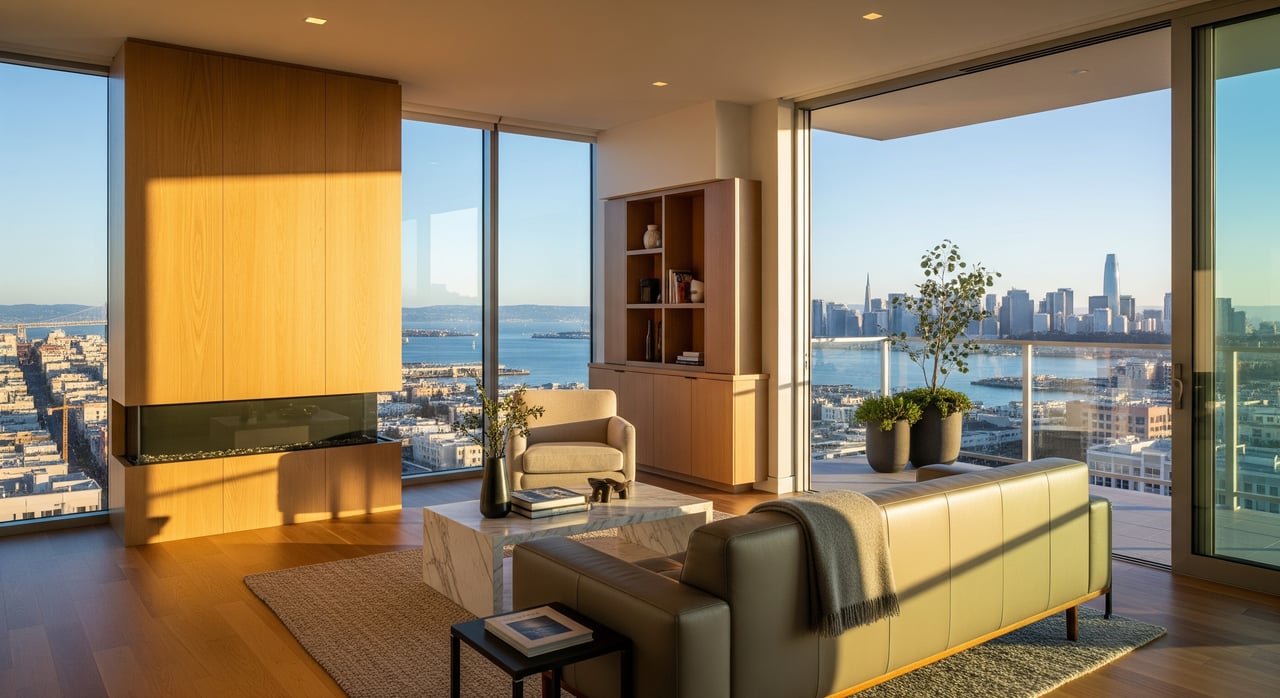
Flying into SFO for a board meeting or a quick weekend, you want a quiet, secure base that is ready when you are. A San Francisco pied-à-terre gives you just that, but the right unit and building policies make all the difference. In this guide, you will learn the essentials that matter in this market, from city rules and HOA due diligence to privacy, financing, and turnkey setup. Let’s dive in.
San Francisco pied-à-terre basics
Most pied-à-terres in San Francisco are in luxury condo towers or boutique high-rises. Newer concrete towers tend to offer 24/7 staffing and robust amenities. Older buildings may deliver larger floorplans with fewer services. Your choice comes down to how you plan to use the home, your privacy needs, and how much onsite support you want.
Downtown neighborhoods such as SoMa, South Beach, Yerba Buena, and the Financial District place you close to corporate offices, dining, arts, and quick freeway access to SFO. If you prefer a quieter residential feel with premium retail and parks, look to adjacent premium areas while confirming commute and airport routes.
Market and regulatory essentials
San Francisco has clear short-term rental rules. STR activity is generally limited to your primary residence, which must be registered with the city. For most pied-à-terres that are not primary residences, Airbnb-style use is not compatible. Review the policy at the San Francisco Office of Short-Term Rentals before you plan any rentals.
Expect real property transfer taxes at closing that scale with price. These city and county taxes are material on higher-value transactions. You can review current rates and related fees on the San Francisco Treasurer and Tax Collector site.
Annual property taxes in California follow Proposition 13. Plan for a baseline around 1 percent of the assessed value plus voter-approved local assessments. Your CPA can confirm specifics for your purchase.
Earthquake risk is a practical consideration. Building age, construction type, and any seismic retrofit history affect insurance, noise control, and post-event habitability. Ask for specifics during due diligence, especially master policy coverage and deductibles.
Most condo buildings are governed by HOAs under California’s Civil Code. If you want to review the legal framework for common interest developments, see the state’s resources for California’s Davis-Stirling Act.
Choose the right tower
Your building choice determines day-to-day experience. Look at service profile, privacy, and track record of management. Full-service towers with 24/7 concierge, valet, and controlled access help with arrivals at odd hours and discrete logistics. Boutique conversions may offer character and fewer neighbors.
Location matters for access and privacy. Consider traffic patterns for early morning airport runs, proximity to corporate centers, and how cars enter and exit the garage. Evaluate hospital access, dining, and whether the building offers a covered drop-off for drivers.
HOA leadership and reserves drive long-term experience. Strong reserves and clear house rules support predictability. Ask about recent special assessments, litigation, and insurance limits, including earthquake exclusions or large deductibles.
Due diligence checklist for towers
- Request HOA budget, reserve study from the last 3 to 5 years, financial statements, insurance summary, CC&Rs, bylaws, meeting minutes from the last 12 to 24 months, any litigation notices, and the resale certificate.
- Confirm rental, occupancy, and STR policy in writing. Find minimum lease terms, owner-occupancy requirements, and any lease caps.
- Verify amenity rules, guest registration, hours, and whether third-party vendors are allowed.
- Inspect building systems and condition. Ask about elevators, plumbing and HVAC maintenance, façade or window work, and any capital projects that may trigger assessments.
- During a site visit, assess staff professionalism, valet flow, package handling, cleanliness of common areas, storage availability, and EV charging.
Policies that shape usability
A beautiful condo with the wrong rules will not function well as a pied-à-terre. Focus on these policy areas early.
- Guest policies. Some HOAs limit guest stays or require registration and ID stickers. Confirm how overnight guests are handled and whether guest use differs from short-term rentals.
- Lease and sublet rules. Many associations require a waiting period before leasing or set a minimum lease length. Lease caps can restrict renting later if plans change.
- Parking and storage. Ask if spaces are deeded or leased, if they can be sold separately, guest parking rules, and EV charging availability or waitlists. Confirm bulk storage for luggage and seasonal items.
- Vendors and deliveries. Buildings set delivery hours, elevator reservations, and insurance requirements for installers. High-rises often require elevator pads and staff oversight for furniture moves.
- Staffing and services. Clarify concierge hours, security procedures, in-house housekeeping or linen services, and policies for outside vendors such as private chefs or drivers.
Questions to ask the HOA or management
- Is non-primary ownership permitted and are there any primary residence requirements?
- Are STRs allowed and, if so, what registration applies? If not, what is prohibited?
- What are the lease rules, including minimum terms and any lease caps?
- Are parking spaces deeded and can they be transferred? What is the EV charging policy?
- What are the guest registration and overnight guest rules?
- Are there current or planned special assessments or major capital projects?
- What is the reserve fund balance and the date of the last reserve study?
- Is the HOA or developer involved in any litigation?
- What insurance is required for contractors and housekeepers?
Ownership, financing, and privacy
Many buyers hold a pied-à-terre in a trust or an LLC, sometimes in combination. These vehicles can streamline estate planning and add privacy. Complete anonymity is challenging due to bank KYC checks and federal reporting rules. Review beneficial ownership reporting requirements under the Corporate Transparency Act on FinCEN’s site with your legal team.
Lenders view pied-à-terres differently from primary residences. Some will underwrite a second home, others categorize as investment property. Expect different down payment and reserve requirements compared with a primary home. Many buyers choose cash for speed and discretion, then consider financing later.
Model your total cost of ownership. Include HOA dues, utilities, individual condo insurance, optional earthquake coverage, and property taxes. At closing, plan for recording, escrow, and transfer taxes. For the latest transfer tax framework, consult the San Francisco Treasurer and Tax Collector. Coordinate all tax and residency questions with your CPA.
Remote closing and escrow safety
If you are buying from out of market, set your closing team early. Select a reputable local escrow and title company that regularly handles UHNW transactions and remote signings. Confirm title insurance, wire protocols, and the signing plan before contingencies expire.
Use strict wire-fraud prevention. Only rely on wiring instructions that you verify directly with escrow by phone using a trusted number. Avoid sending funds based on email-only instructions.
Remote notarization may be available depending on the title company and current county policies. Some buyers use a limited power of attorney with notarization. Your escrow officer will advise on acceptable options for your file.
Turnkey furnishing and move-in
A turnkey specialist can set up furniture, art, linens, and kitchenware on a tight schedule. They also coordinate deliveries, installers, and elevator reservations, and can hold seasonal items in storage. Building rules often require advance booking, vendor insurance, and a staff escort during large deliveries.
Confirm the building’s delivery windows and elevator protection requirements. Schedule installations after condo compliance checks are complete. If you are timing this with closing, plan the calendar with your HOA and vendors two to three weeks in advance.
Property management for pied-à-terre owners
A dedicated property manager simplifies ownership when you are not in town. Typical services include keyholding, utilities setup, regular inspections, preventive maintenance, and vendor coordination. Many owners schedule monthly or quarterly deep cleans and filter changes.
Carry an individual HO-6 policy that covers interior finishes, personal property, liability, and loss of use. Consider separate earthquake insurance for dwelling and contents. Review how your policy aligns with the building’s master policy and deductibles.
Your step-by-step playbook
- Pre-search, 1 to 2 weeks
- Retain a local luxury broker, real estate attorney, and CPA. Align on ownership structure and privacy.
- Search and shortlist, 1 to 4 weeks
- Review 3 to 8 top units across suitable towers. Include both active and quiet opportunities.
- Due diligence before offer, 1 to 2 weeks
- Pull HOA documents, financials, insurance, and rules. Confirm guest, lease, parking, storage, and vendor policies. Schedule an inspection and a detailed video walkthrough.
- Offer and negotiation, days
- Negotiate price and contingencies for inspection, HOA review, and financing if needed. Prepare earnest money wire with fraud safeguards.
- Escrow and closing, 30 to 45 days typical
- Finalize title and escrow logistics and signing plan. Confirm transfer taxes and closing funds.
- Turnkey fit-out and move-in, 2 to 8 weeks
- Book furnishing vendors, reserve elevators, submit contractor insurance, and set up utilities, access cards, concierge accounts, and parking decals.
Quick checklists
PdT suitability
- STR prohibited for non-primary residences in most cases, confirm building rules.
- Lease terms align with your needs, and any lease caps are understood.
- Parking, EV charging, and storage match your use case.
- Delivery rules and vendor policies support turnkey setup.
- Staff training and discretion protocols meet your expectations.
HOA documents to secure
- Budget, reserve study, financial statements, insurance summary.
- CC&Rs, bylaws, house rules, and board minutes.
- Litigation disclosures and any special assessments.
- Parking, storage, guest, and vendor rules in writing.
Security and discretion
- Key management, visitor screening, and package handling protocols.
- Staff confidentiality policies and directory privacy options.
- Smart-home security and network protection.
Remote closing essentials
- Escrow company verified, title insurance arranged.
- Wire instructions confirmed by phone with a known number.
- Signing plan set, with POA or remote notarization if permitted.
Common pitfalls to avoid
- Assuming you can rent short term. San Francisco rules limit STRs to primary residences that are registered with the city. Most pied-à-terres do not qualify.
- Overlooking HOA reserves or pending assessments. These can change your monthly and annual costs.
- Underestimating logistics. Missed elevator bookings and incomplete vendor insurance will delay installation.
- Ignoring earthquake exposure. Understand master policy limits and consider separate earthquake coverage.
- Expecting total anonymity. Ownership records and federal reporting reduce privacy. Structure correctly and plan disclosures with counsel.
Final thoughts
A successful San Francisco pied-à-terre is about fit, function, and execution. When you select the right tower, confirm policies up front, and run a clean remote closing with a turnkey setup plan, you get a quiet, effortless base that is ready on your schedule. If you want a discreet, end-to-end process with access to top-tier inventory and building-level insight, connect with Bryant Kowalczyk to schedule a private consultation.
FAQs
Can I use a San Francisco pied-à-terre for Airbnb?
- San Francisco generally limits short-term rentals to your primary residence that is registered with the city, so most non-primary pied-à-terres cannot be used for STRs; see the Office of Short-Term Rentals.
What transfer taxes should I expect on a high-end condo purchase in San Francisco?
- The city and county levy real property transfer taxes that scale with price, which can be significant on luxury transactions; review current rates on the San Francisco Treasurer and Tax Collector site.
How are property taxes calculated for a San Francisco pied-à-terre?
- California’s Proposition 13 sets a baseline near 1 percent of assessed value plus local assessments, with your CPA best positioned to estimate your specific bill for the target property.
Do San Francisco condo owners need earthquake insurance?
- Many owners consider separate earthquake coverage for interior finishes and contents since building master policies can have exclusions or high deductibles; review coverage details during HOA due diligence.
Can I buy a pied-à-terre through an LLC for privacy?
- Many buyers use trusts or LLCs to enhance privacy, but complete anonymity is unlikely due to bank KYC and federal beneficial ownership reporting; see the FinCEN BOI guidance and consult counsel.
How long does a remote closing typically take in San Francisco?
- From offer acceptance to closing, 30 to 45 days is common, followed by 2 to 8 weeks for turnkey furnishing and move-in depending on vendor schedules and building rules.