If you want a San Francisco home that works when you are in town and stays simple when you are not, a lock-and-leave lifestyle can be a smart fit. For many buyers, the appeal is not just luxury. It is reduced friction, stronger day-to-day support, and a building system designed to make arrivals and departures easier. In this guide, you will see how lock-and-leave living works in San Francisco, which building features matter most, and what to review before you buy. Let’s dive in.
What lock-and-leave means in San Francisco
In San Francisco, lock-and-leave living usually means owning in a managed condo or branded residence where the building handles many common daily touchpoints. That can include staffed access, package receipt, security monitoring, amenity management, and some maintenance coordination. You still own a private residence, but the building is set up to reduce the number of moving parts you manage yourself.
This distinction matters. A lock-and-leave condo is not the same as a hotel stay, even when service levels feel elevated. Under California Civil Code section 4775, the homeowners association is generally responsible for common-area repair, replacement, and maintenance, while you are generally responsible for your separate interest, or your unit, unless the governing documents say otherwise.
That structure is one reason the best lock-and-leave opportunities in San Francisco are really a systems story. The lifestyle works best when staffing, security, HOA governance, reserve planning, and location all support each other. A beautiful unit alone does not create low-friction ownership.
Why downtown San Francisco fits this lifestyle
San Francisco’s downtown core is especially well suited to lock-and-leave ownership because it combines high-rise housing with strong transportation and a dense mix of daily conveniences. SF.gov describes Downtown as a major residential and mixed-use center that includes Yerba Buena, SoMa, the Financial District, the Embarcadero, East Cut, South Beach, Rincon Hill, and Civic Center. It also highlights the area’s transportation network and concentration of arts, culture, retail, hospitality, and waterfront uses.
For you as an owner, that means the building is only part of the equation. A transit-rich, service-oriented location makes it easier to arrive for a short stay, enjoy the city, and leave again without much operational burden. In places like Union Square and Yerba Buena, SF.gov also notes strong connections around Market Street and Powell Street Station, along with access to entertainment, arts and culture, hospitality, and retail.
In practical terms, that supports a pied-à-terre or second-home pattern very well. You can step into the city, rely on building services, and make the most of a neighborhood that is already set up for convenience. That is a major reason downtown San Francisco remains central to this conversation.
Building features that reduce friction
The most effective lock-and-leave buildings tend to share a familiar service formula. Across several of San Francisco’s best-known towers, that includes attended lobbies, concierge support, controlled access, package handling, parking support, and amenities that help you work out, host, or work remotely. These features do not all carry the same weight, so it helps to know which ones truly support the lifestyle.
Staffed lobby and controlled access
A 24-hour attended entry is one of the most important features to look for. It can create a more seamless experience for deliveries, guest arrivals, and everyday building access. It also adds consistency when you are away for stretches of time and want confidence that the front-of-house operation is active and predictable.
At Four Seasons Private Residences at 706 Mission, residents are greeted by a dedicated concierge and controlled access with round-the-clock security monitoring. The Avery says residents enter through a private 24/7 valet parking garage into an attended lobby with round-the-clock concierge availability. Millennium Tower also highlights a 24-hour concierge model.
Concierge and package handling
For many buyers, concierge support is where lock-and-leave living becomes real. The value is not just courtesy service. It is the ability to have packages received, amenity bookings handled, and certain logistics managed without adding more tasks to your day.
Millennium Tower says its concierge assists with package delivery, restaurant and hotel reservations, amenity bookings, and moving or unpacking services. That kind of support can be especially useful if you use the home part-time or travel often. It creates a more reliable ownership rhythm when your schedule is not always local or predictable.
Valet parking and easier arrivals
If you plan to come and go quickly, arrival flow matters more than many buyers expect. Private or valet-supported parking can simplify the handoff from city arrival to residence access. In a high-rise setting, that can make the difference between a convenient pied-à-terre and one that still feels operationally heavy.
The Avery specifically notes private 24/7 valet parking. For buyers who split time between cities or use the residence for shorter stays, features like this can materially improve the ownership experience.
Amenities that support daily life
The best amenity packages are not just impressive on paper. They reduce the number of errands, memberships, and outside arrangements you need to manage. Fitness, entertaining, remote work, and lounge space all matter more when you want to keep your time in the city simple.
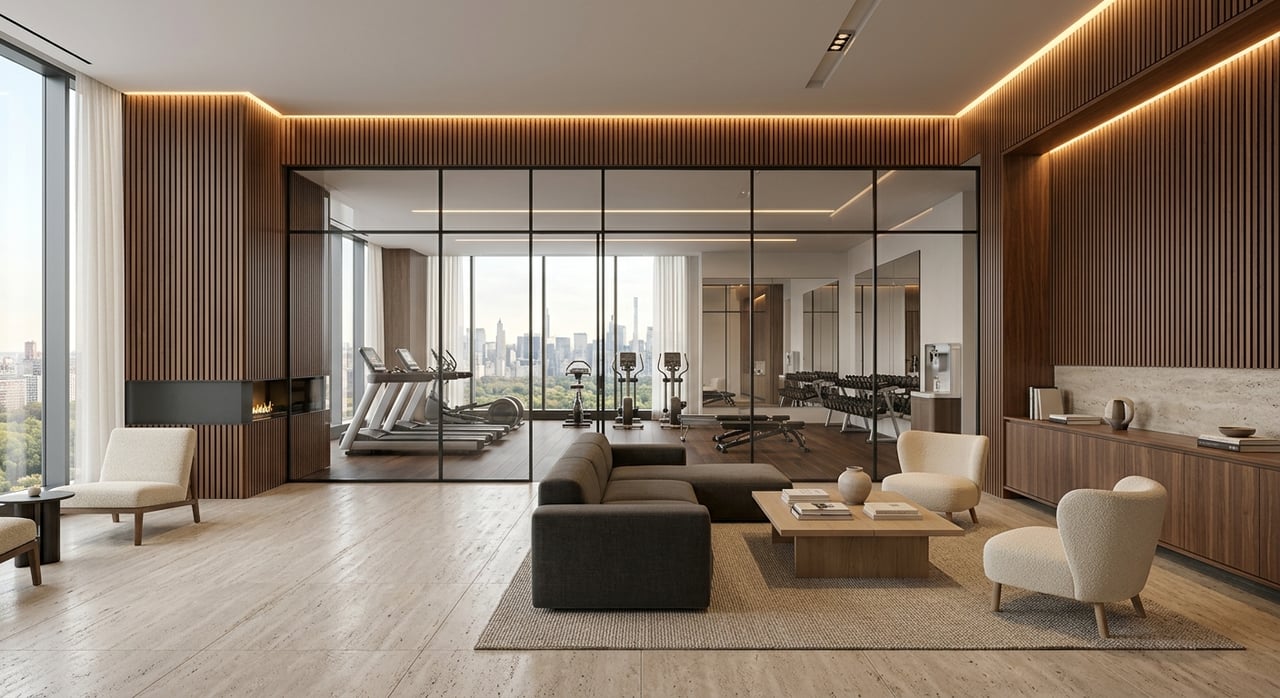
Four Seasons at 706 Mission lists a full-floor Club, fitness studio, entertainment terrace, game room, and programs tied to wine and art concierge support. The Avery includes coworking and conference rooms, a fireplace lounge, a media and game room, a demonstration kitchen, a private dining room, and a sky terrace. The Metropolitan in Rincon Hill offers a 24-hour attended lobby, concierge service, fitness center, indoor heated pool, spa, sauna, library, theater room, and landscaped courtyard.
San Francisco buildings that illustrate the model
San Francisco offers a range of lock-and-leave options rather than a single formula. Some buildings lean further into branded service, while others focus on strong staffing and a comprehensive amenity package. The right fit depends on how you plan to use the home and how much service infrastructure you want around you.
Branded residences
Branded residences are an important part of the city’s luxury housing landscape. Four Seasons Private Residences at 706 Mission includes 146 private residences in Yerba Buena and presents a service model designed for owners who may use the property as a permanent residence, vacation home, or pied-à-terre. Four Seasons also states that its residential teams can protect and maintain the home whether owners are present or away.
The St. Regis residential platform is also represented in San Francisco through The Residences at The St. Regis San Francisco. For some buyers, brand-backed service standards and operating culture are a major part of the appeal.
Luxury high-rise towers
Traditional luxury towers can also support a strong lock-and-leave lifestyle when operations are well structured. The Avery is a 56-story tower with 118 luxury view condominiums on the upper floors and is located two blocks from the Transbay Transit Center. That combination of scale, staffing, and proximity to transit supports short stays and easy in-and-out ownership.
The Metropolitan in Rincon Hill and Millennium Tower are also useful examples because they show how concierge, attended access, and broad amenity offerings can create low-friction city living without relying solely on a hospitality brand. If you are comparing buildings, it is worth looking beyond the finish level and asking how daily operations actually work.
The ownership side you cannot ignore
A lock-and-leave purchase should feel simple, but the due diligence behind it should be thorough. In San Francisco, the quality of the HOA is a core part of the product. Service, maintenance, and long-term building health depend on it.
HOA responsibility versus owner responsibility
Under California Civil Code section 4775, the association is generally responsible for common-area repair, replacement, and maintenance unless the declaration says otherwise. The owner is generally responsible for the separate interest. The same code section also states that temporary relocation costs during association repairs are borne by the affected owner.
That means even in a service-rich building, you should understand exactly where the building’s responsibility ends and yours begins. If you expect to be away for months at a time, this is especially important. A concierge desk does not replace your responsibility for the interior of your residence.
Budget, reserves, and assessments
A maintenance-light lifestyle still depends on disciplined financial planning. California Civil Code section 5300 requires annual budget reports that include a pro forma operating budget and a summary of reserves. Civil Code section 5570 includes the Assessment and Reserve Funding Disclosure Summary, which asks whether projected reserve balances will be sufficient over the next 30 years and whether additional assessments may be needed if they are not.
For you as a buyer, that makes reserve strength more than a technical detail. It is part of how reliably the building can maintain common spaces, support systems, and long-term upkeep. If the reserve picture is weak, the lock-and-leave promise can feel less predictable over time.
Inspection requirements matter too
California Civil Code section 5551 requires condominium projects to inspect exterior elevated elements at least once every nine years, with the first inspection completed by January 1, 2025, and then every nine years after that. This requirement is another reminder that building health is not abstract. It is operational.
In a luxury high-rise purchase, buyers often focus on views, floor plans, and amenities first. Those are important, but inspection compliance, reserves, and ongoing maintenance planning deserve the same attention. They directly affect your ownership experience.
Required disclosures before closing
Before closing on a condo in a common interest development, California requires sellers to provide governing documents, recent financial documents, assessment statements, and certain rental-restriction disclosures. For new projects, the California Department of Real Estate states that public reports include CC&Rs, costs and assessments for maintaining homeowners associations and common areas, and other material disclosures.
This is where careful review matters. If your goal is travel flexibility with minimal management work, you want to understand the rules, costs, and operating framework before you commit. The smoother the system is on paper, the more dependable it tends to feel in practice.
How to evaluate a lock-and-leave condo
If you are serious about this lifestyle, it helps to evaluate each building through both a service lens and an ownership lens. Marketing language may highlight amenities, but your decision should also account for governance, logistics, and long-term building discipline.
Here are key questions to ask as you compare options:
- Is the lobby attended 24/7?
- What does the concierge actually handle day to day?
- How are packages, guest arrivals, and move-in logistics managed?
- What are the parking, storage, pet, and visitor rules?
- What do the HOA budget and reserve disclosures show?
- Are there signs that future assessments may be needed?
- What is the split between common-area maintenance and owner responsibility?
- Does the surrounding neighborhood support easy short stays and quick access around the city?
The right building should answer these questions clearly. If the answers are vague, the ownership experience may be as well.
Why specialist guidance matters
In San Francisco’s luxury condo market, lock-and-leave living is rarely about one feature or one building tour. It is about matching your schedule, travel patterns, privacy preferences, and service expectations to the right tower, location, and HOA profile. The details matter, especially at the high end.
That is where building-level expertise can make a meaningful difference. Understanding how major addresses like Four Seasons, Millennium Tower, St. Regis, and other premier towers operate helps you move beyond surface-level comparisons. It also helps you assess whether a residence will truly support the low-friction lifestyle you want.
If you are considering a San Francisco high-rise condo designed for easier ownership, a private, building-specific review can save time and reduce surprises. To discuss the right fit for your goals, schedule a private consultation with Bryant Kowalczyk.
FAQs
What does lock-and-leave living mean in San Francisco condos?
- It usually means owning in a managed condo or branded residence where the building supports staffed access, package handling, security, amenity operations, and some maintenance coordination, while you still remain responsible for your own unit.
Which San Francisco neighborhoods fit a lock-and-leave lifestyle best?
- Downtown San Francisco is a strong fit because SF.gov identifies areas like Yerba Buena, SoMa, the Financial District, the Embarcadero, East Cut, South Beach, Rincon Hill, and Civic Center as major residential and mixed-use areas with strong transportation and access to arts, retail, hospitality, and waterfront uses.
What building features matter most for lock-and-leave ownership?
- The most important features are usually a 24-hour attended lobby, concierge support, controlled access, package handling, parking support, and amenities that reduce everyday friction such as fitness, lounge, and remote-work spaces.
What does a San Francisco HOA handle in a lock-and-leave condo?
- Under California Civil Code section 4775, the association is generally responsible for common-area repair, replacement, and maintenance unless the governing documents say otherwise, while the owner is generally responsible for the separate interest.
What San Francisco condo documents should buyers review before closing?
- Buyers should review governing documents, recent financial documents, assessment statements, and applicable rental-restriction disclosures, because these materials help clarify rules, costs, and the overall health of the association.
Are branded residences common in San Francisco luxury housing?
- Yes. The market includes branded residence examples such as Four Seasons Private Residences at 706 Mission and The Residences at The St. Regis San Francisco, alongside luxury high-rise towers with strong service and amenity packages.