Wondering whether a luxury tower’s amenity package is truly worth the price? In San Francisco, that question matters more than ever because condo buyers are often weighing not just design and views, but also monthly HOA costs, long-term building upkeep, and how smoothly daily life will actually run. If you are comparing high-rise residences in San Francisco, this guide will help you look past the glossy brochure and evaluate amenities in a way that supports both lifestyle and financial confidence. Let’s dive in.
Why Amenities Matter in San Francisco
In a market as expensive and selective as San Francisco, amenities can influence both your living experience and a building’s resale appeal. Realtor.com’s April 2026 market overview put San Francisco’s median listing price at $1,245,000, while Redfin’s 2025 luxury report placed the city’s median luxury home sale price at $6,092,801.
At those price points, amenities are not just decorative extras. They can shape how convenient, secure, and enjoyable your day-to-day life feels, and they can also affect how a building competes with other luxury towers when it is time to sell.
Start With Daily Use Value
The best way to evaluate amenities is to begin with a simple question: How often will you actually use this? A beautiful roof deck or dramatic owners’ lounge may look impressive on a tour, but features you use weekly or daily often deliver far more real value.
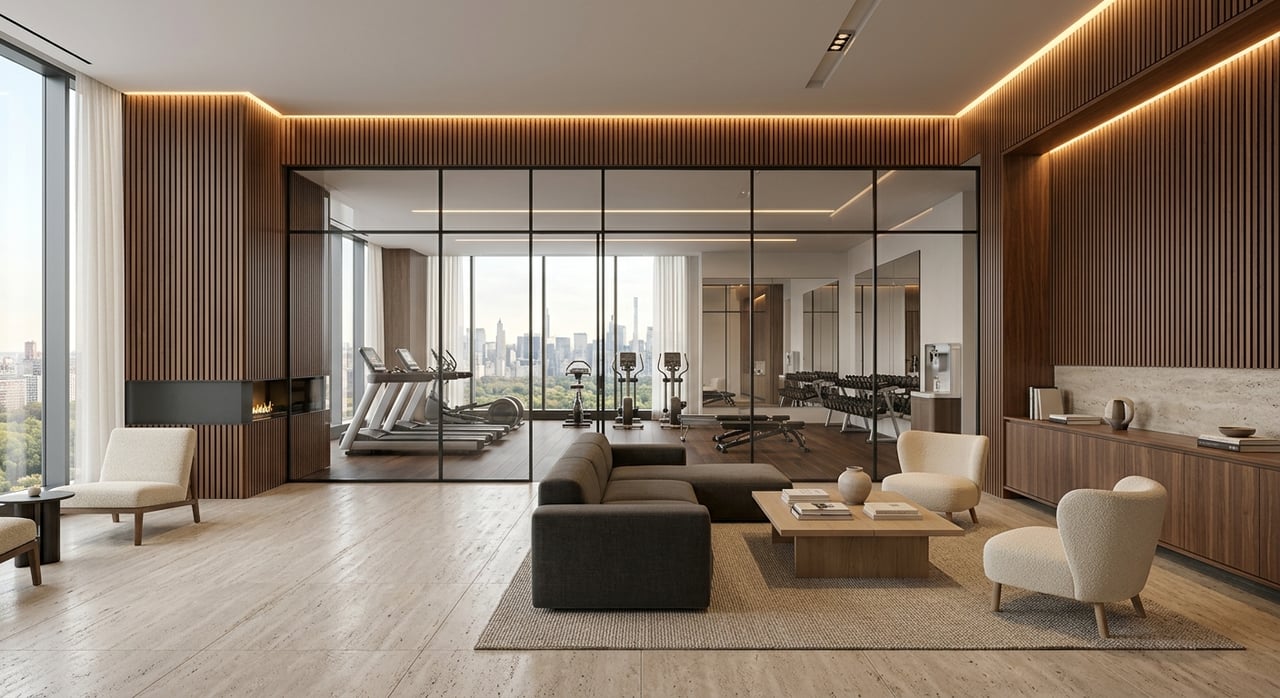
In many San Francisco luxury towers, the most meaningful amenities tend to be the ones that reduce friction in everyday living. That usually includes staffed entry, package handling, secure access, parking, EV access, and a fitness space that is practical rather than purely decorative.
High-Use Amenities to Prioritize
When you tour a building, pay close attention to amenities that support routine convenience. These often have the strongest impact on how the building performs for you over time.
- Staffed lobby or attended entry
- Secure building access
- Reliable package handling
- Parking availability
- EV charging access
- Usable fitness center
- Reservable shared spaces with clear rules
A strong amenity package is usually less about quantity and more about usefulness. If a feature fits naturally into your routine, it is more likely to justify the cost you pay to maintain it.
Look Beyond the Showpiece Features
Luxury towers often market amenities as part of the lifestyle story, and that is understandable. Still, a showpiece feature should be judged by what it requires to operate, maintain, and eventually replace.
California Department of Real Estate reserve-study guidance treats many amenity-related items as long-term common-area components. That can include lobby and clubhouse furnishings, exercise equipment, elevators, HVAC, fire sprinklers, garage doors, balconies, roofs, pools, spas, and related equipment.
This matters because every attractive shared feature comes with an ongoing financial obligation. A pool, spa, lounge, or roof deck should be viewed not only as a perk, but also as part of the building’s long-term maintenance and reserve planning.
Ask Practical Questions During Your Tour
A polished space can still underperform in real life. As you evaluate a tower, ask questions that reveal how usable the amenity actually is.
- Is the amenity staffed or supervised?
- Are reservations required?
- What are the operating hours?
- Is it frequently closed for maintenance?
- Does it feel actively used and well maintained?
- Is access simple, or does it involve too many restrictions?
These details can tell you more than the design itself. An amenity that looks great but is hard to use may add less value than a simpler feature that functions well every day.
Treat HOA Costs as Part of the Amenity Package
Amenities are tied directly to HOA dues, so you should evaluate them together. HOA costs are not a side note in a luxury condo purchase. They are part of the full ownership picture.
Realtor.com’s 2025 HOA research found that 84.8% of condo and townhome listings carried HOA dues. Its 2024 report put median condo HOA dues at $375, and a March 2026 Realtor.com report using homeowner data said San Francisco ranked among the metros with the highest share of people paying more than $500 per month, with a metro median HOA fee of $349.
High HOA dues are not automatically a red flag. In many cases, they support meaningful services, ongoing maintenance, security, and shared resources that improve daily living. The key is making sure the fees align with services and amenities you will truly use.
Read the HOA Budget Carefully
If you want to separate real value from marketing language, the HOA budget and disclosure package are essential. California’s HOA disclosure rules require an annual budget report that summarizes reserves, states whether repairs are being deferred, discloses whether special assessments are expected, explains reserve-funding mechanisms, and includes an insurance summary.
For resale transactions, the disclosure packet also includes governing documents, current assessments and fees, unresolved violation notices, approved fee changes, rental restrictions, board minutes if requested, and the most recent inspection report required by statute. For a luxury-tower buyer, this paperwork helps show whether the building can support its amenity package responsibly.
What to Review in the Documents
A buyer-focused review should look at both current cost and future risk. You want to understand not just what the building offers today, but whether it is positioned to maintain those features without surprise financial pressure.
Focus on these points:
- Current monthly assessments and recent fee changes
- Reserve funding levels
- Whether repairs are being deferred
- Whether special assessments are expected
- Rules that affect amenity access or use
- Recent board activity that may signal operational issues
This is where building-level expertise matters. In luxury high-rises, the difference between a smooth ownership experience and a frustrating one often shows up in the financials long before it appears in the lobby.
Understand Reserve Planning
Reserve planning becomes even more important when a tower has a large or complex amenity set. California requires a visual inspection of accessible major components at least every three years when the reserve threshold test is met, and reserve studies are intended to help buyers understand the financial implications of replacement funding and guard against deferred maintenance.
That is especially relevant in full-service and amenity-rich buildings. The more moving parts a tower has, the more important it is that the association has a realistic long-term plan for upkeep and replacement.
If a building offers a gym, elevators, roof deck, spa, lounge, and extensive common areas, each of those features has a lifecycle. A buyer should want confidence that the building is planning ahead, rather than reacting after systems age or fail.
Consider Building Scale and Cost Efficiency
Not every tower spreads amenity costs the same way. Larger amenity-rich buildings may be able to distribute costs across more residents, while smaller boutique buildings can sometimes have higher fees even with fewer shared features.
That means you should compare dues in context. A larger tower with a broader resident base may support a stronger service package more efficiently, while a smaller building may offer greater privacy but a different cost structure.
Neither model is automatically better. The right fit depends on how you value convenience, scale, service level, and your own pattern of use.
Check Operations and Compliance
In San Francisco, amenity evaluation should also include an operational lens. The San Francisco Fire Department states that its High Rise Section performs annual fire-safety inspections for all high-rise buildings in the city.
For buildings with pools or spas, San Francisco public-health rules require a current operations manual along with ongoing supervision and maintenance. So if a tower promotes a pool, spa, or similar shared facility, the real issue is whether the building can keep it safe, clean, and functional year after year.
This does not mean you need to become a building engineer. It simply means you should think beyond appearance and ask whether the management structure seems capable of sustaining what is being advertised.
A Simple Framework for Comparing Towers
When you are deciding between San Francisco luxury towers, it helps to use the same checklist every time. That keeps you focused on value rather than presentation.
Use This Five-Point Checklist
- How often will you actually use the amenity?
- Is it easy to access, reserve, and enjoy?
- Does the HOA budget and reserve study appear to support it?
- Does the building’s size help spread costs efficiently?
- Do the rules and hours make the feature practical for your lifestyle?
This framework can bring clarity quickly. A building with fewer but highly functional amenities may be a better fit than one with a longer list of features that are expensive, restricted, or underused.
What Smart Luxury Buyers Often Prioritize
In San Francisco high-rise living, the strongest amenity package is often the one that supports comfort with the least friction. Buyers frequently place the highest value on security, service, ease of delivery handling, parking functionality, and wellness features they will use consistently.
That is why the most effective evaluation is personal, not performative. The right tower for you is not necessarily the one with the most dramatic brochure. It is the one whose amenities fit your routine, justify the dues, and appear financially sustainable over time.
If you are comparing full-service towers, boutique residences, or marquee San Francisco buildings, a specialist perspective can help you read beyond the surface and evaluate what truly supports long-term value. For discreet guidance on high-rise residences, HOA structure, and building-level differences, schedule a private consultation with Bryant Kowalczyk.
FAQs
How should you compare amenities in San Francisco luxury towers?
- Start with how often you will actually use each amenity, then compare access, maintenance, HOA cost, and reserve support.
Why do HOA dues matter when evaluating San Francisco condo amenities?
- HOA dues often fund maintenance, security, and shared amenities, so they are part of the true cost and value of tower living.
What documents should you review before buying in a San Francisco luxury building?
- Review the HOA budget report, reserve information, current assessments, fee changes, governing documents, and other resale disclosures required under California law.
Are high HOA fees always a bad sign in San Francisco luxury towers?
- No. Higher fees can be reasonable if they support services, maintenance, and amenities you will use and if the building is financially well managed.
What amenities usually offer the best day-to-day value in a San Francisco high-rise?
- Buyers often get the most practical value from staffed entry, secure access, package handling, parking or EV access, and a usable fitness space.