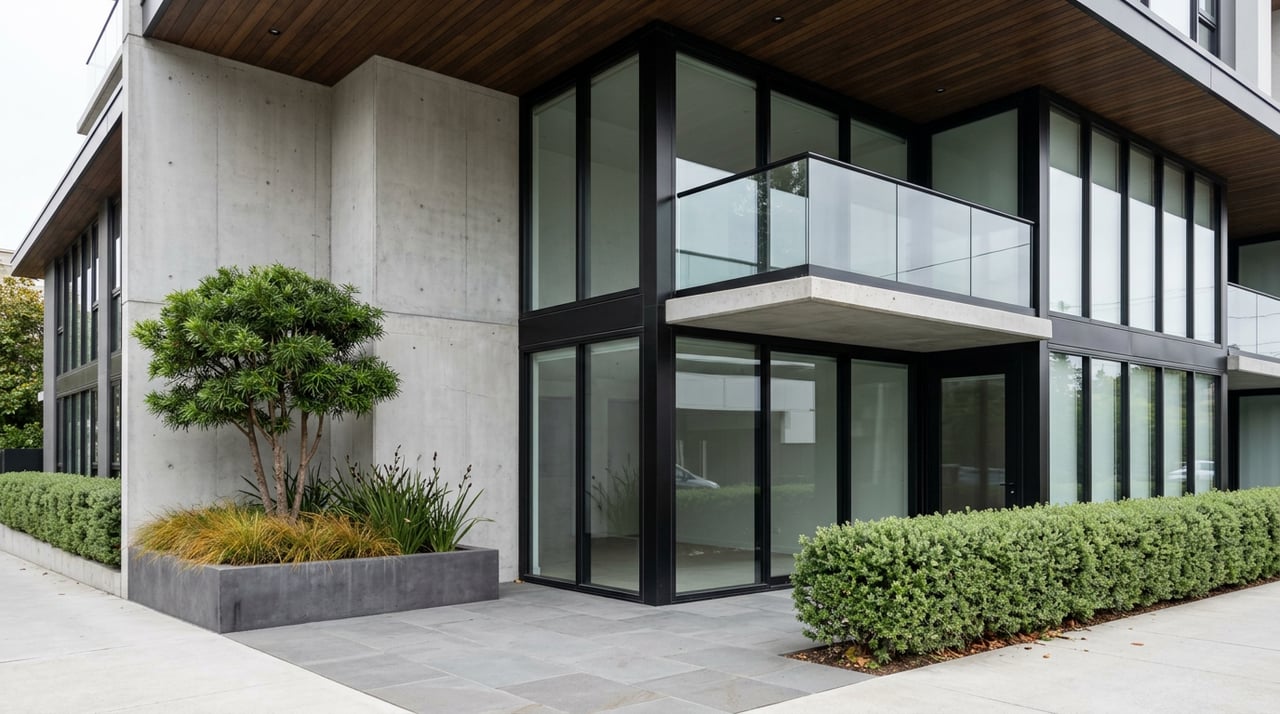
Tacos El Patrón, at 1325 Fillmore, opened its doors within the past few days and is already running a full breakfast-through-dinner menu out of a space that sat empty for years. Farther up Fillmore, the Clay Theater's marquee at 2261 Fillmore is still dark, the way it has been since 2020. Nearby, the corner windows at 2001 Fillmore are papered over, and the old Starbucks at 2222 Fillmore has sat empty for months, one of several storefronts on this stretch still carrying the green construction notices that mark a building under the same ownership group.
Both are happening along Fillmore, but on different timelines. One story is about independent operators opening in vacant storefronts. The other follows larger projects backed by roughly $150 million in outside capital as they move toward opening.
Funding and Acquisitions on Fillmore
The second story started in January 2024, when a limited liability company tied to project director Cody Allen paid $11 million for the shuttered Clay Theater. In the months that followed, a patchwork of similarly quiet entities bought five more aging buildings on the corridor, adding roughly $40 million more in acquisitions. The financing behind those purchases came from a private fund called Aegis Reserve Partners LP, which raised $100 million from a single investor that same January, an investor widely understood to be venture capitalist Neil Mehta of Greenoaks Capital.
That was round one. In April 2026, a second Mehta-linked vehicle, Friends of Fillmore LP, raised another $50 million to push the effort forward. By this summer, the nonprofit steering the project, the Upper Fillmore Revitalization Project, was citing a cumulative total north of $150 million raised toward turning around this stretch of the street.
The three anchor projects associated with the fund—a Korean steakhouse, a Thai noodle spot from a Michelin-starred chef, and the Clay Theater—had not opened as of this week.
Recent Food Openings on Fillmore
Recent food openings and reopenings on Fillmore include:
- Tacos El Patrón, at 1325 Fillmore, opened its doors this month in a space that had cycled through Nia Soul Cafe and Scott's Chowder House before sitting vacant. Owner Alberto Pineda, who runs two other locations in Pleasant Hill and the Mission, built out his biggest space yet, about 50 seats, with a two-page menu covering eight tacos guisados, Mexico City–style tacos de disco, burritos, tortas, enchiladas, and a full breakfast menu, open 10 a.m. to 10 p.m. daily. Pineda has said plainly that part of the draw for him was simple: there were no taco spots left on this stretch of the street.
- Super Duper Burgers opened July 14 at 1701 Fillmore, taking over a former Burger King. The property is not held by UFRP.
- A new sushi takeout counter opened this week at 1552 Fillmore, filling the space briefly held by Aji Kiji before that operator relocated downtown.
- Palmer's Tavern, at 2298 Fillmore, reopened last fall after a two-year closure caused by a water leak, with its long bar and red leather stools restored and chef Matt Russell Woods running the kitchen. It has stayed open since, still serving steak au poivre and spinach and artichoke dip to a neighborhood that missed it.
These businesses opened or reopened in existing spaces; the major projects described below involve more extensive construction and permitting.
Status of the Major Fillmore Projects
The three projects associated with the Upper Fillmore Revitalization Project are at different stages.
Monami, the Korean steakhouse from Junsoo and Hyunyoung Bae, the team behind Michelin-starred SSAL on upper Polk, is taking over the corner at 2001 Fillmore, the space that was Pacific Heights Bar & Grill for years, then Thai Stick, then Noosh. Construction started June 1 for roof and second-floor work. Bae has talked about what he wants the place to feel like, as reported by SFist:
"I want it to be a Korean barbecue version of House of Prime Rib."
That is a specific, appealing pitch, and it is still a pitch. As of the most recent reporting this August, Monami is targeting a fall 2026 opening, which puts it somewhere in the weeks ahead, but it has not opened yet.
Chef Pim Techamuanvivit, the force behind Michelin-starred Kin Khao and Nari, is taking over the old Starbucks at 2222 Fillmore with a project currently going by the working title Khao Soi Ya, a nod to the Thai curry noodle soup she first tested at a pop-up inside Nari. The team confirmed the project to local reporters in August but said the name could still change, and there is no confirmed opening window. The organization is expecting an update sometime in the new year, which in practice means 2027.
The Clay Theater, the corridor's marquee restoration, cleared its biggest hurdle on April 1, 2026, when the city's Historic Preservation Commission unanimously approved plans to restore the 113-year-old single-screen house at 2261 Fillmore. The $5 million project keeps the landmark neon sign and the name, adds a new balcony level and elevator, and is slated for more than 500 screenings a year once it reopens. Early estimates floated an opening as soon as this year. The latest word from this August pushed that timeline to sometime in 2027.
Even the smaller independent projects tied to the corridor's turnover are moving on the slower clock. Jevikal, a Korean food truck out of San Jose planning its first permanent location in the former Pride of the Mediterranean space at Fillmore and Sutter, still has no opening date as of this writing.
Why the Two Clocks Run at Different Speeds
The gap here is not really about money or intent. It is about what each project actually has to touch before it can open.
A taco counter or a burger stand can move into an existing kitchen, swap signage, and open in a season. Monami and the Clay Theater are both full gut jobs, new roofs, new elevators, seismic work, permits that have to clear a preservation commission before a contractor can touch a historic arch or a neon sign. That kind of work takes the same amount of time whether the budget behind it is $150,000 or $150 million. If anything, a bigger, more visible project draws more scrutiny at every step. The Clay Theater's April approval came only after roughly two years of public back and forth over the broader plan for the block, the kind of scrutiny a taco lease never has to clear.
The Rest of the Block Is Moving Too
The corridor's changes are not limited to the headline projects. Jonathan Adler closed his longtime home furnishings store at 2133 Fillmore this summer, and Rocksbox shuttered its jewelry shop at 2208 Fillmore not long after opening there as a permanent location in late 2024. Those closures sit alongside quieter arrivals from the past year: Miette's bakery setting up on the street, and longtime Sacramento Street home goods shop Sue Fisher King relocating to 1913 Fillmore after 46 years in its old spot. None of that traffic has anything to do with Mehta's fund. It is simply what a retail corridor does when leases turn over.
If you already live in Pacific Heights and you have been assuming that every green construction notice on Fillmore traces back to the same $150 million bet, the more accurate read this fall is that the street is running two separate stories at once. The recent openings are already serving customers; the larger projects remain in development and are worth watching.
If you are weighing what any of this means for a property on or near Fillmore Street, from timing a sale around a shifting retail corridor to understanding how a building's HOA or commercial neighbors factor into resale value, that is a conversation worth having with someone who tracks this block for a living. BrokerLuxe works this corridor and the buildings around it every day. Schedule a private consultation when you are ready to talk specifics.