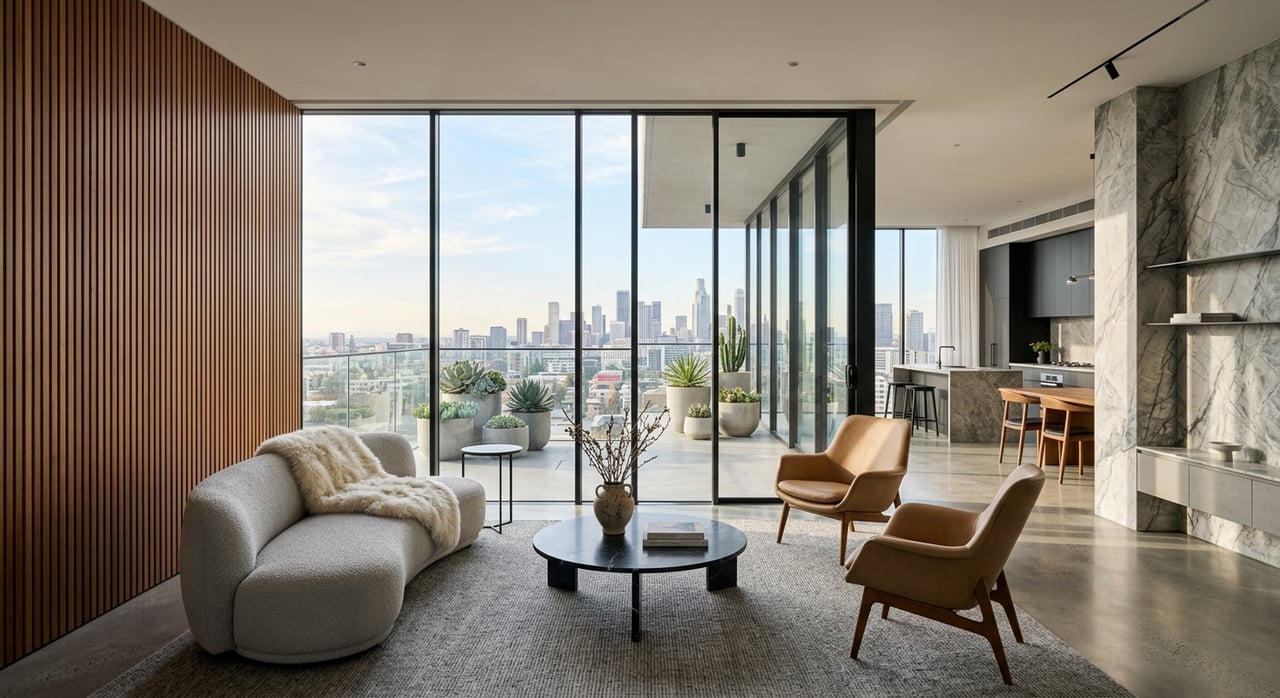
If your day already revolves around meetings downtown, dinners near the Embarcadero, and flights through SFO, owning a car in San Francisco may feel less like a necessity and more like a habit. For many luxury buyers, the real question is not whether you can live completely without a car, but whether you can live exceptionally well while relying on one far less. In downtown San Francisco, that answer is often yes, especially when the right building, transit access, and daily conveniences line up. Let’s dive in.
Why downtown supports car-light living
Downtown San Francisco stands out because daily life can fit into a surprisingly compact area. According to the San Francisco County Transportation Authority’s 2019 survey, walking accounted for 43.4% of intra-San Francisco trips, compared with 37.3% for driving and 15.8% for transit. That makes walking the city’s dominant mode for trips within San Francisco.
This matters more in the core, where jobs, dining, services, and cultural venues cluster close together. The Financial District alone employs more than 220,000 office workers, and Walk Score rates it 99 out of 100. Nearby downtown blocks around 4th and Mission also score in the mid-to-high 90s, with Transit Scores of 100.
For a luxury buyer, that creates a different kind of convenience. Instead of planning your day around traffic, parking, and garage access, you may be able to structure your routine around a short walk, a train connection, or a quick ride when needed.
Transit options that replace daily driving
A car-light lifestyle only works when mobility feels easy. In downtown San Francisco, several transit systems overlap in a way that supports both local routines and regional travel.
Muni for everyday city access
SFMTA says Muni covers the city through buses, light rail, historic streetcars, and cable cars. The Muni Metro system includes six lines: J, K, L, M, N, and T. Downtown subway stations between Civic Center and The Embarcadero are shared by Muni and BART, which helps simplify transfers.
For your daily life, that can mean easier access to offices, restaurants, appointments, and entertainment without relying on a car for every stop. In a neighborhood where many errands and destinations are already close together, Muni often fills in the remaining gaps.
BART for airport and regional access
BART anchors downtown with stations at Embarcadero, Montgomery Street, Powell Street, and Civic Center/UN Plaza. For buyers who travel often, one of the biggest advantages is direct rail access to San Francisco International Airport. BART states that the SFO station is located in the International Terminal and that downtown San Francisco is about 30 minutes from SFO by train.
That kind of airport access is a real quality-of-life upgrade. If you travel for business or split time between cities, a direct train connection can make downtown living feel more efficient than many car-dependent alternatives.
Caltrain for Peninsula and South Bay travel
Caltrain connects San Francisco with the Peninsula and San Jose. It also connects with BART, Muni, SamTrans, and VTA. If your work or personal routine extends south, this adds another layer of flexibility to a downtown home base.
For some buyers, this is where car-light living becomes especially practical. If your key destinations cluster around downtown San Francisco and the Peninsula rail corridor, you may find that daily car ownership plays a much smaller role than expected.
Ferries for scenic regional connections
Ferry service adds yet another option. Golden Gate Ferry serves Sausalito, Larkspur, and Tiburon from the San Francisco Ferry Building, while SF Bay Ferry serves Oakland/Alameda, Vallejo, and South San Francisco. Current schedules show about 40 minutes between South San Francisco and the East Bay, and about 60 minutes between downtown San Francisco and Vallejo.
Ferries are not just functional. They can also make regional travel feel calmer and more enjoyable, especially for buyers who value experience as much as efficiency.
Walkable daily life feels different here
Transit is only part of the story. What makes downtown San Francisco compelling is that so much of daily life can happen within walking distance.
San Francisco Travel describes the Ferry Building Marketplace as a destination for cafes, wine bars, specialty food shops, innovative restaurants, and a farmers’ market. The same downtown area also includes the Exploratorium and many notable dining destinations along the Embarcadero and in the Financial District.
SF.gov’s Union Square/Yerba Buena action plan adds more context. The area draws almost half of visitor travel to San Francisco and includes roughly half of the city’s hotel rooms, more than 3.5 million square feet of retail, and numerous museums, theaters, and performance venues.
For you as a resident, that concentration can change how a city feels. When dining, meetings, fitness, entertainment, and weekend activities sit within a short radius, daily movement becomes simpler and more fluid.
Luxury towers make the lifestyle easier
Car-free or car-light living can sound like a compromise in some cities. In downtown San Francisco’s luxury market, it can feel quite the opposite.
Premium towers often pair central locations with service-rich amenities that reduce friction. That matters because luxury is not only about finishes and views. It is also about how easily your home supports the way you move through the city.
Four Seasons Private Residences at 706 Mission
Four Seasons Private Residences at 706 Mission offers a private driveway with porte-cochère, a lobby attendant, valet, concierge, and a full-floor Club. Amenities include a bar lounge, private dining room, outdoor terrace, library, game room, golf simulator, and fitness studio. The project also promotes art concierge and wine concierge programming.
For a resident with a car-light routine, these features can make home life feel more complete. You are not leaving the building for every need, and when you do head out, valet and concierge support can help streamline logistics.
181 Fremont and Millennium Tower
181 Fremont includes a full-floor Residents’ Club 470 feet in the sky, with a wraparound observation terrace, catering kitchen, sitting room, lounge areas, and a media room. Millennium Tower emphasizes hotel-style conveniences with a wine tasting room and storage facility, a private movie theater, an outdoor terrace with fireplace and waterfall, and yoga and Pilates space.
These amenities reinforce an important point. In the right downtown building, luxury living is not defined by how often you drive. It is defined by how much comfort, service, and optionality you have close at hand.
St. Regis and the service ecosystem
The St. Regis San Francisco offers another useful example of downtown’s service ecosystem. Its concierge can arrange private car service, and guests in residence receive access to a complimentary house car on select evenings for drop-offs within a two-mile radius. The property is also located in SoMa near SFMOMA and close to the Financial District.
That combination of service, location, and cultural access helps explain why central San Francisco appeals to buyers who want prestige without sacrificing efficiency. You may not need to own a car for every movement when your building and neighborhood already provide so much support.
Car-free living is block-specific
It is important to be precise here. Downtown San Francisco can support a car-light luxury lifestyle, but that does not mean every San Francisco address offers the same experience.
The strongest case is highly location dependent. The Financial District scores 99 on Walk Score, while Yerba Buena Island scores 16 and is labeled car-dependent. That contrast shows why building selection and exact location matter so much.
If you want to rely less on a car, the most practical fit is usually a residence near strong transit nodes, daily services, and concentrated amenities. In luxury real estate, the address itself often determines whether the lifestyle feels seamless.
Who benefits most from this lifestyle
This type of setup tends to work best if your routine already aligns with downtown. You may be a strong fit for car-light living if several of these apply:
- Your office or frequent meetings are in the Financial District, SoMa, Yerba Buena, or nearby
- You travel often through SFO and value direct rail access
- You prefer walkable dining, culture, and fitness options
- You spend time along BART, Caltrain, or ferry corridors
- You want a high-service building with valet, concierge, or similar support
- You are looking for a pied-à-terre that feels efficient and turnkey
For these buyers, living without depending on a car every day can feel less like a sacrifice and more like a luxury in itself.
What to look for in a downtown condo
If this lifestyle appeals to you, focus on more than the residence alone. The building and surrounding blocks will shape your day-to-day experience just as much as the floor plan.
Here are a few practical factors to weigh:
- Distance to BART, Muni, Caltrain, or ferry access
- Walkability for dining, groceries, coffee, and daily errands
- Building services such as valet, concierge, lobby staffing, or private car arrangements
- On-site amenities that reduce outside trips
- The rhythm of your work, travel, and social routine
- Whether you want a full-time residence or a pied-à-terre
For luxury condo buyers, the right purchase is often about matching the building to the life you actually lead. That is where neighborhood fluency and building-level expertise become especially valuable.
Downtown San Francisco does not promise a no-car life for everyone. What it does offer, in the right location, is the chance to live with more ease, less friction, and a stronger connection to the city around you. If you are weighing premier towers in the Financial District, SoMa, South Beach, or Yerba Buena, working with a specialist can help you compare not just residences, but lifestyles. To explore downtown high-rise options with discreet, building-specific guidance, connect with Bryant Kowalczyk.
FAQs
Is car-free luxury living realistic in downtown San Francisco?
- Yes, for many buyers it is realistic to live car-light in downtown San Francisco because walking is the leading intra-city travel mode, transit access is strong, and many daily destinations cluster in the downtown core.
Which downtown San Francisco areas are most walkable?
- The Financial District is among the strongest examples, with a Walk Score of 99, and nearby blocks around 4th and Mission also score in the mid-to-high 90s.
How do downtown San Francisco residents get to SFO without a car?
- BART provides direct rail access to SFO, and the airport is about 30 minutes from downtown San Francisco by BART.
What transit options support car-light living in downtown San Francisco?
- Key options include Muni, BART, Caltrain, and ferry service, which together support local, regional, and airport travel.
Do luxury buildings in downtown San Francisco offer services that reduce the need for a car?
- Yes, several prominent towers offer features such as valet, concierge support, private car arrangements, and extensive on-site amenities that can reduce how often you need to drive.
Is car-free living practical everywhere in San Francisco?
- No, the lifestyle is highly location dependent, and the strongest fit is usually in transit-rich, walkable downtown blocks rather than in every neighborhood citywide.